Remember 2020? It was a "magical" time, wasn't it? The global pandemic formerly known as Covid-19 had us all locked in our living rooms, staring at walls, until we realized there was a glowing rectangle that could keep us from losing our minds. Netflix didn't just grow; it exploded. It was the only friend we had left.
Then came 2022. The world "reopened." People started doing this strange thing called "physical social interaction" again. The "experts" looked at the charts, saw the growth taper off, and panicked. They saw Disney and a dozen other "me-too" streaming services flooding the market with cheap subscriptions and thought, "This is the end for Netflix."
How cute.
The "Choice" Illusion
They thought they could lure you away with low prices and "more choice." But let's be honest: choice is just another word for "clutter." You spent more time scrolling through their mediocre libraries than actually watching anything.
The competition thinks this is a price war. It's not. It's a war for your time. And Netflix? Netflix is already in your blood.
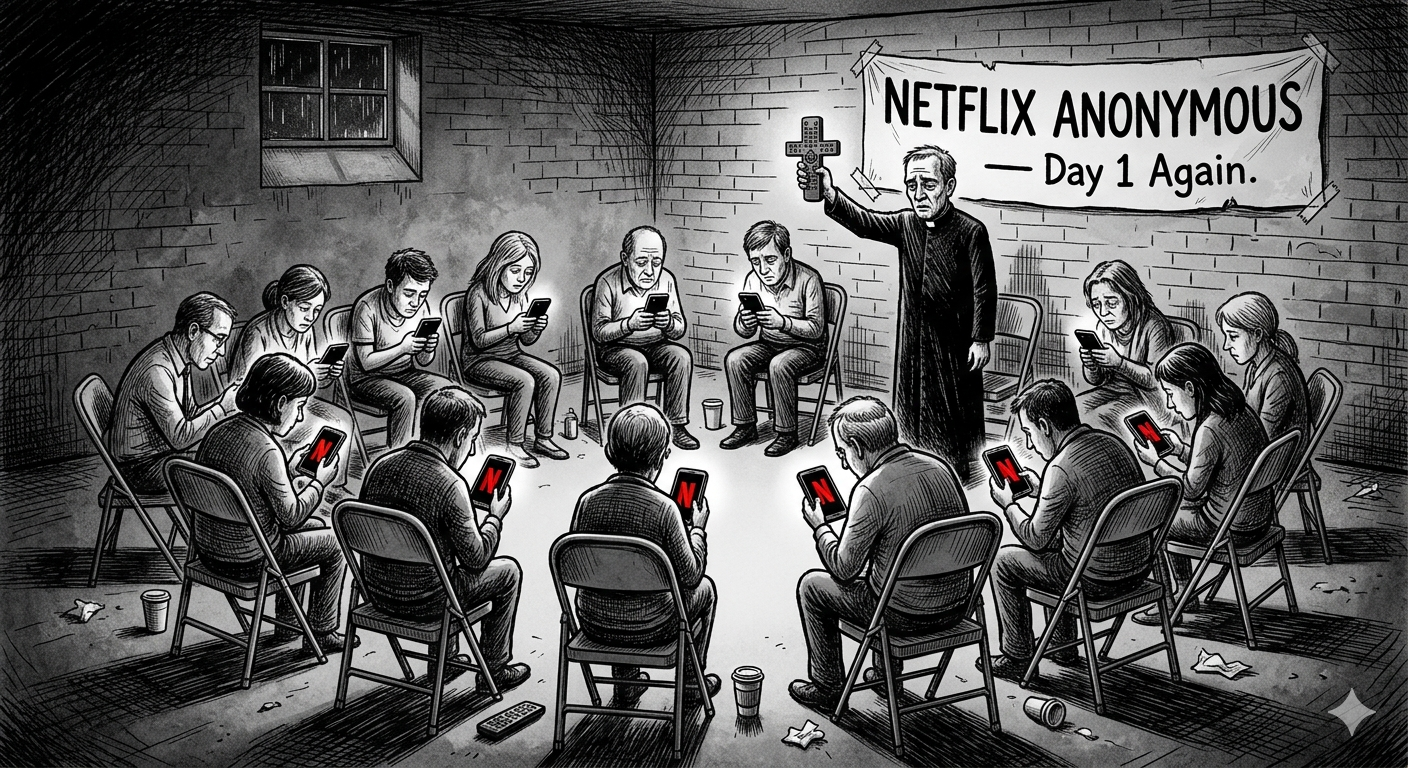
Once an Addict, Always an Addict
Let's call it what it is. This isn't "entertainment." It's a digital habit. We've entered the era of the FOMO generation. You can go to all the dinner parties and "physical social interactions" you want, but the moment someone asks, "Did you see that new Netflix series?" and you say "no," you're an outcast. You're irrelevant.
So, what do you do? You go home. You upgrade your subscription. You pay the higher fees. Because you don't want to be left out of the conversation. One addict brings another. It's a beautiful, self-sustaining cycle of social pressure.
The Great 2026 Resurrection
By 2026, the dust will have settled. Those "cheap" competitors will be struggling to keep the lights on while Netflix evolves from an "entertainment expense" into an essential service. It's not a luxury anymore; it's a utility, like water or electricity—just much more addictive.
Netflix has locked you in. They've captured a slice of Gen X's nostalgia and Gen Z's entire attention span. You'll pay whatever they ask, not because you want to, but because you have to.
"We've made it so essential to your social survival that unsubscribing feels like moving to a desert island. And we know you're not that brave."