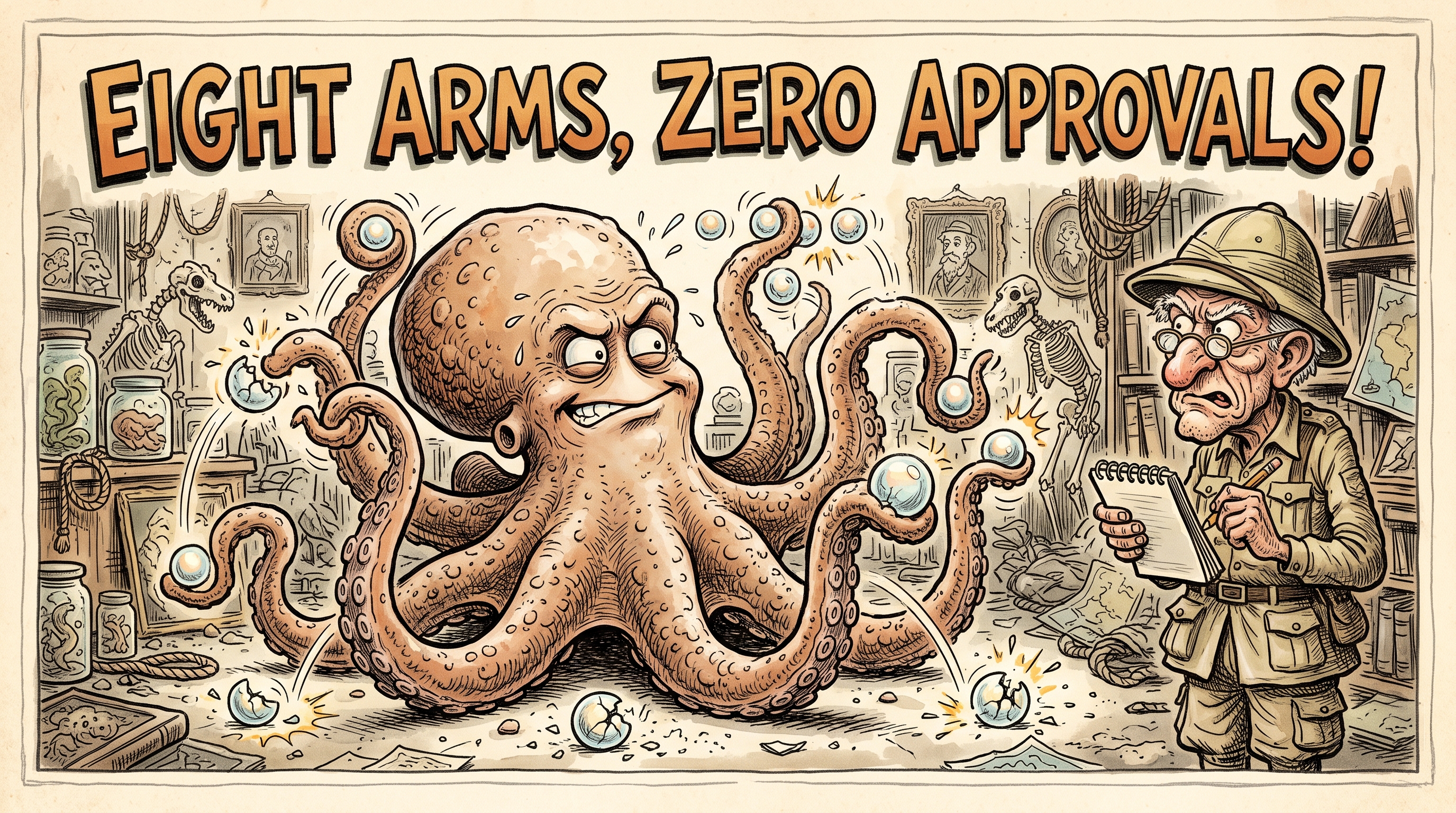
There are two ways to think about biotech.
You can think about it as a collection of companies trying to sell medicines.
Or you can think about it as a collection of companies trying to build machines that repeatedly produce medicines.
That distinction matters.
Because some biotech companies are basically one major drug wrapped in a corporate structure.
Others are trying to create platforms that can generate multiple drugs, across multiple diseases, using the same underlying technology.
Vertex is a useful example of what happens when a biotech grows up. It built a major franchise around cystic fibrosis and then used that commercial base to expand into additional areas.
Regeneron took another route.
Its identity is closely tied to antibody discovery and a broader research engine capable of producing multiple medicines. That is a different kind of biotech story.
Then there is Moderna.
Before COVID, mRNA was a technology platform that many investors viewed as promising but unproven at enormous commercial scale.
Then the world changed.
Suddenly the platform had a product.
That distinction is important.
A platform is not the same thing as a drug.
A platform is an engine.
The investor question becomes whether that engine can repeatedly produce commercially valuable medicines.
Biotech has several versions of these engines.
- Antibody platforms.
- mRNA.
- Gene editing.
- Cell therapy.
- Protein engineering.
- Computational drug discovery.
- AI-assisted drug design.
Each one sounds impressive.
The harder question is whether the technology produces actual clinical and commercial results.
This is where biotech investors can get themselves into trouble.
A company announces that its platform can potentially generate dozens of drugs.
Investors immediately start valuing those future drugs.
But future drugs have a nasty habit of not existing yet.
The pipeline can look enormous on a slide.
The clinical evidence can still fit inside one paragraph.
That is why you have to separate three things:
- Technology.
- Pipeline.
- Products.
Technology is what the company says it can do.
Pipeline is what the company is trying to turn that capability into.
Products are what have actually made it through development and into the market.
Those are not interchangeable.
A platform can be scientifically brilliant and commercially disappointing.
A single drug can be extremely valuable even if the underlying company has no grand platform.
And sometimes a platform becomes more valuable precisely because one drug proves that the technology works.
This is also where partnerships become important.
A biotech may discover a molecule but lack the money, manufacturing capacity or global commercial infrastructure to take it all the way to patients.
So it partners.
The larger company may provide development capital, regulatory expertise, manufacturing and sales infrastructure.
In exchange, the biotech may receive an upfront payment, milestone payments and royalties.
That can transform the economics of a small biotech.
Suddenly it doesn't have to finance every stage itself.
But again, read the deal.
A headline can say:
"$5 billion collaboration."
That does not mean the biotech has $5 billion in the bank.
Much of the value may depend on future development, regulatory and commercial milestones.
Royalties create another layer.
A company may not own the entire economics of a drug but may receive a percentage of future sales.
That can become a valuable asset.
In other words, biotech companies don't only sell drugs.
- They can sell rights.
- They can sell technology.
- They can sell access to a platform.
- They can license molecules.
- They can partner programs.
- They can collect royalties.
- They can even sell the entire company.
This creates three useful mental models.
- The one-drug company.
- The platform company.
- The discovery machine.
The one-drug company is easy to understand. Everything depends heavily on one asset.
The platform company is making a broader bet that its technology can produce multiple successful programs.
The discovery machine is trying to build an organization that repeatedly turns scientific research into commercial products.
None of these is automatically better or worse.
They simply create different risks.
One-drug companies can be extremely sensitive to a single trial.
Platform companies can be extremely sensitive to whether the platform actually translates into multiple successful medicines.
Discovery machines can spend enormous amounts of money before investors see the next major product.
And this is where the biotech business becomes fascinating.
The market isn't just trying to figure out whether a drug works.
It is trying to figure out what kind of company is sitting underneath the drug.
- Is this a molecule?
- A platform?
- A pipeline?
- A royalty stream?
- A manufacturing capability?
- A discovery engine?
Or a PowerPoint presentation wearing a lab coat?
Eventually, the clinical data decide.
References
- [1]Vertex Pharmaceuticals Incorporated: Reports Fourth Quarter and Full Year 2025 Financial Results. Cystic fibrosis franchise revenue and the company’s expansion into additional therapeutic areas.
- [2]Regeneron Pharmaceuticals, Inc.: Annual Report on Form 10-K for fiscal year 2025. Description of the VelociSuite antibody-discovery technologies and the company’s marketed and pipeline products.
- [3]Moderna, Inc.: SEC Form 10-K Annual Reports & Quarterly Financial Results. Revenue trajectory of the mRNA platform before, during and after the pandemic.
- [4]Biotechnology Innovation Organization (BIO) / Informa Pharma Intelligence / QLS Advisors: Clinical Development Success Rates and Contributing Factors 2011–2020 (2021). Historical probability of a drug moving from Phase 1 through approval.
- [5]SRS Acquiom / Fierce Biotech: Average biopharma biobucks decline, while upfront deal payments rise (Sept. 24, 2025). Analysis of how much of a headline biopharma deal value is paid upfront versus contingent on milestones.
Educational content, not financial advice. Vertex, Regeneron and Moderna are referenced here only as illustrative examples of different biotech business models — not as recommendations to buy, sell, or trade any stock, and no price target or forward return is implied for any company named.